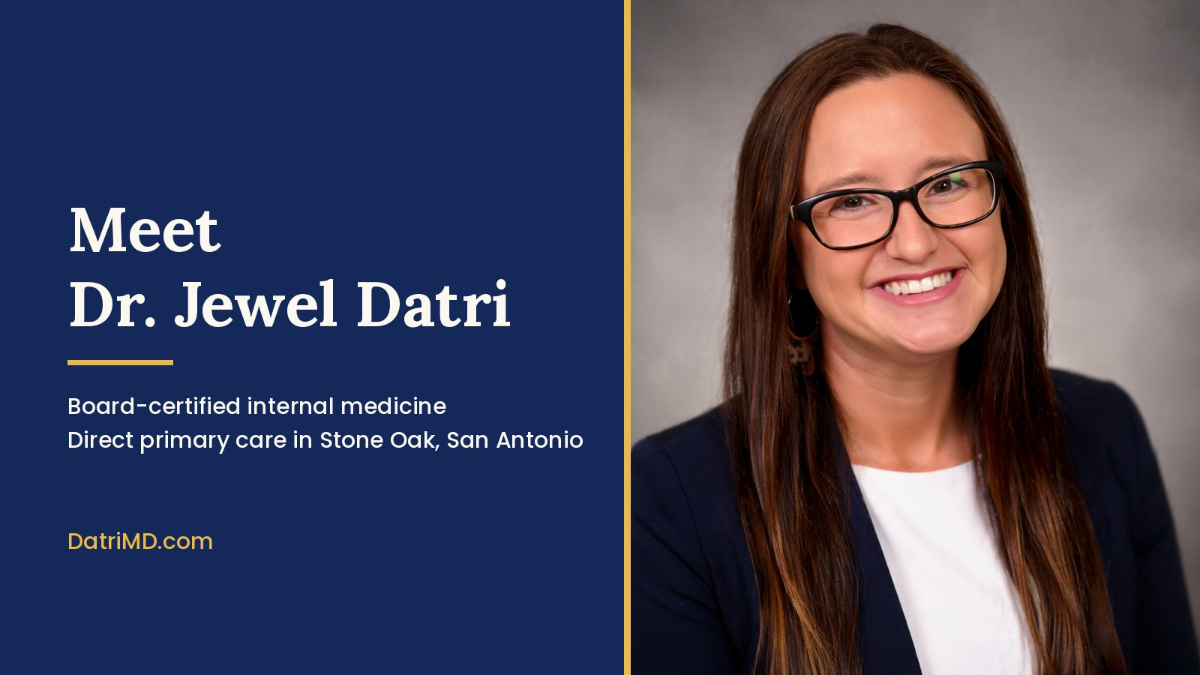
From the team at Datri MD, Stone Oak
People often ask us whether direct primary care (DPC) would work for them. The answer depends on where you are in life: your coverage, your health, and what you need from a doctor.
So we gathered the ten questions we hear most and answered them in one place. Start with the ones that sound like you.
Urgent care is useful in a pinch. DPC is for the long haul — a doctor who knows you, so many of those urgent problems can be handled with a quick message or same-week visit instead.
It starts before you join, with a free 15-minute meet & greet. If it feels like a good fit, your first full visit is where Dr. Datri gets to know you.
To make the most of it, bring:
Expect a real conversation about your history, your goals, and a plan for what comes next.
Whether you choose us or another practice, these five questions will help you compare:
We're happy to answer every one of these at your meet & greet.
Often, yes. DPC gives you predictable everyday care for one flat fee, so a routine visit or a sick day doesn't come with a surprise bill.
DPC is not insurance, though. It doesn't cover hospital stays, surgery, or emergencies. Many people pair it with:
Not sure what fits? Talk with a licensed insurance agent or tax professional about your situation.
It can work alongside them. Some veterans keep their VA benefits for specialty care and prescriptions, and use DPC for faster, more personal everyday care.
A few things to know:
Dr. Datri trained in part at the Southeast Louisiana Veterans Health Care System, where she was named a VA Health Professions Outstanding Trainee. She understands how veterans' care works.
Many people on Medicare do use DPC, but the rules are different, so it's worth understanding them first.
If you have a Medicare Advantage or supplement plan, ask how it handles care from a doctor who doesn't bill Medicare. And bring your questions to the meet & greet — we'll give you a straight answer.
When several specialists each prescribe something, it's easy for medications to pile up. Some may overlap, interact, or no longer be needed. Older adults are especially likely to run into this.
A regular medication review is one of the most useful things a primary care doctor can do. With longer visits, Dr. Datri can go through every pill and supplement with you, check how they work together, and simplify where it's safe to do so. As an internist with a focus on older adults, this is work she does every day.
Never stop or change a medication on your own — talk with your doctor first.
Diabetes can reduce feeling and blood flow in the feet. That means a small blister or cut can go unnoticed and turn into a wound that's slow to heal.
Simple habits make a big difference:
With DPC, you can send that message the day you notice something, instead of waiting weeks for an appointment. Dr. Datri treats wounds right here at Datri MD, backed by additional training in wound care and hyperbaric medicine she completed in 2026. If a wound needs hyperbaric oxygen therapy, which our office doesn't offer, she'll refer you to a specialist.
Yes — and it's a normal part of good primary care. The CDC recommends that everyone ages 13 to 64 get tested for HIV at least once, and more often if you may be at higher risk.
Primary care is also a natural place to talk about PrEP, a medicine that greatly lowers the chance of getting HIV when taken as prescribed. And people living with HIV benefit from a primary care doctor who understands how HIV and its treatment affect the rest of their health.
Dr. Datri is credentialed as an HIV Specialist (AAHIVS) by the American Academy of HIV Medicine. At Datri MD, she offers HIV testing, prescribes PrEP, and provides primary care for people living with HIV. These conversations are private, judgment-free, and part of routine care.
If you've spent a winter in San Antonio, you know cedar fever. It's an allergic reaction to mountain cedar (Ashe juniper) pollen, which usually peaks from December through February. Despite the name, it rarely causes a real fever.
Some quick clues:
Getting your flu shot before winter helps. And when you can't tell what you've got, DPC means you can message your doctor and get answers quickly, instead of sitting in a waiting room.
Whether you're self-employed, a veteran, on Medicare, managing diabetes or a long medication list, or just tired of guessing whether it's cedar fever again, the answer comes back to the same thing: a doctor who knows you and has time for you.
That's what direct primary care is built for.
Book your free 15-minute meet & greet: (210) 943-9578 · DatriMD.com
540 Madison Oak Dr, Ste 370 · San Antonio, TX 78258
Your doctor. Your time. Your care.
This post is for general information and isn't medical, legal, or financial advice. Please talk with your doctor, insurance agent, or tax professional about your own situation.
Ready for a different kind of care?
Join Datri, MD for personalized, unhurried medicine focused on you—not insurance.
Complete the form below and we’ll reach out to get you scheduled for a Meet and Greet session.
Want to learn more about how Direct Primary Care works?
Visit our FAQ page to see how membership, pricing, and access are different from traditional practices.
Have questions? We’re happy to help. No pressure, no obligation.
Reach out anytime—we’ll personally respond and walk you through whether this is the right fit for you.
540 Madison Oak Dr
Ste 370
San Antonio, TX 78258